Light roast is a sincere roast. It declines to conceal bad eco-friendly coffee behind caramelization. It presses acidity to the front. It requests for mindful extraction and benefits you with quality, florals, citrus, stone fruit, and sweet taste that spends time like the last light on a clear day. If you enjoy that profile, the delivery solution you choose issues more than you could believe. Freshness, roast technique, packaging, and logistics all shape the mug. After a decade of dialing in light roasts in your home, racking up issues on cupping tables, and fielding agitated texts from buddies concerning sour shots, I have a functioning map for navigating Coffee Beans Delivery choices without shedding the magic that light roast promises.
What light roast really needs from a distribution service
Light roast is delicate in a different way than dark roast. You are paying for unstable aromatics and nuanced origin personality that dull promptly with oxygen, warmth, and time. The very best Coffee Beans Delivery for this style gets four points right, and you can hear them in the cup.
First, roast date matters. If a roaster will not print it, carry on. The array I go for is shipping within 24 to 72 hours of roast, getting here within a week, and brewing from day five to day 21 for most washed coffees. Natural-processed and anaerobic lots can take advantage of a somewhat longer rest, 8 to 28 days, as trapped carbon dioxide and fermentation notes work out right into balance. Delivery that routinely drops beans older than 2 weeks on arrival costs you top notes and sweetness.
Second, packaging needs to be really oxygen-limiting. One-way shutoffs are conventional now, however the actual distinction shows up with high-barrier bags and trustworthy seals. I've checked this in my own cooking area: the exact same Kenyan light roast in a cheap thin bag shed its berry and floral aromatics by day 10, while the high-barrier bag variation held till day 18. If the solution allows you select vacuum-packed or nitrogen-flushed bags for unusual whole lots, that deserves the tiny surcharge.
Third, logistics must match your climate. In summer, beans cook in vans if shipments rest all the time. Roasters that stay clear of Friday roast-and-hold, ship early in the week, and deal cool-pack options for hot regions protect light roasts from tasting baked and flat. A pale bread crust or peanut note where you anticipated citrus can indicate warm direct exposure during transit.
Fourth, curation for light roast specifically. A service that states "we roast light" suggests little unless you see roast contours and intention. Try to find roasters that speak about end temperature level and advancement time, not just sampling notes. If they release color metrics like Agtron or Tonino, even better. A light roast for filter may kick back 65 to 75 on the Specialty Coffee Association range, while an espresso-focused light might dip a couple of factors darker to aid solubility.
Origin and procedure for light roast lovers
The most regular light roast crowd-pleasers originate from a handful of beginning accounts. Ethiopia, Kenya, and Colombia top the checklist for me, but each has traits that influence your distribution option and just how you intend to brew after package arrives.
Ethiopian cleaned coffees typically sing with florals and citrus. They lose delicacy faster than denser, fruit-forward naturals. If you get cleaned Ethiopian treasures, go for smaller, extra regular distributions so you are constantly inside that 7 to 18 day sweet spot. Ethiopian naturals deal with a longer window and tolerate small delivery delays, so they work well if you live far from significant hubs.
Kenya's SL28 and SL34 whole lots, when tidy and well refined, bring blackcurrant, grapefruit, and tomato fallen leave. They can taste wild if you brew ahead of time or as well hot. I like a delivery that lands me a day 7 initial brew and maintains me equipped via day 21. Kenyans can still pop at four weeks, yet the acidic fireworks smooth into a much more spherical red fruit, which some individuals prefer.
Colombia is a shape-shifter. Timeless washed Colombians bring apple, panela, and a sugar foundation that makes them approachable at light roast. Extensive fermentation lots and anaerobics from Colombia can include tropical fruit and a sparkling texture. These frequently require a longer rest and steadier grind changes. If your Coffee Beans Delivery solution flags these as "rest 10 to 14 days," listen.
Other origins are entitled to a look. High-grown Guatemala (Huehuetenango specifically) gives cacao and citrus, a gentle bridge for people reducing into lighter roasts. Rwanda and Burundi cleaned coffees provide tea-like bodies and stone fruit, however sometimes reveal potato flaw; buy from solutions with strong quality assurance and no-questions replacement plans. Panama and Costa Rica use exotic ranges and high-elevation microlots that benefit from nitrogen flush and careful shipping.
Single roaster subscriptions vs multi-roaster curation
I've run both versions in the house for several years. Single roaster https://sergiokjsv809.almoheet-travel.com/coffee-beans-delivery-australia-regional-roasts-well-worth-sipping subscriptions give you uniformity in roast design and logistics. Multi-roaster services allow you tour the world without going after every individual roaster's delivery plan. Light roast followers need to consider compromises.
Single roaster memberships shine when the roaster is a real light-roast specialist. Their group dials accountable temperatures, handles Maillard, and stays clear of tipping or sweltering that will translate into peanut shells in your mug. The delivery is predictable, and you find out how their coffees behave on your equipment. The disadvantage is taste tiredness if everything shares the very same roast signature.
Multi-roaster solutions solve boredom. You could get an Ethiopian from a Scandinavian-style roaster one month, then a Kenyan from an Australian micro-roaster the following. Nonetheless, the distribution solution ends up being the middle layer between you and the roast day. The most effective ones coordinate roast-to-ship securely and release days. The sub-par ones send supply that rested on a shelf for a week. For light roasts, that difference is not subtle.
If you're in Australia, the calculus adjustments once again. Coffee Beans Delivery Australia has a benefit for quality. Several Australian roasters lean lighter, and the domestic logistics are faster than importing from the US or Europe. If you want Nordic-style light accounts without worldwide transit, look for Melbourne and Sydney roasters understood for high-elevation washed Ethiopias and Kenyas. Domestic delivery keeps your coffee inside its optimal pause, and you stay clear of personalizeds delays that can add 3 to 5 days.
Shipping speed, frequency, and bag size
An efficient system defeats inspiration. Light roast does not like being hoarded. It wants a strategy, and that plan works best when you match your brew volume to distribution cadence.
- Choose 250 g or 12 oz bags if you make one to two mugs daily. That dimension refute in 7 to 10 days, maintaining you inside the bright window. If you brew for a household or office, 1 kg bags can make good sense, yet only if you freeze partial portions on day one. Split into closed cylinders or freezer bags, press air out, and freeze. Defrost one part overnight. Do not thaw and refreeze. Weekly or once every two weeks deliveries defeat month-to-month. Even if shipping sets you back a little bit a lot more, the mug high quality pays you back. Build a barrier of one bag in the freezer for emergency situations, yet do not let a line up of six bags collect frost for months. Light roast is about immediacy.
I've tracked waste over a year across a loads houses. The homes that received 250 g every 10 days reported the least stale cups and the least brew accidents. The ones that acquired two kilos monthly without freezing drank the last 3rd because it was there, not due to the fact that it tasted great.
What to try to find in a site or item page
Not all marketing tells the truth, yet particular information associate highly with excellent cups.
Roast date revealed and valued. If you can pick a roast day or the web page informs you "Roasts Tuesday, ships Wednesday," you're in far better hands than when it says "Fresh roasted" with no calendar.
Varietal and processing information. A page that notes SL28, SL34, washed, dual fermentation, or details anaerobic designs aids you expect how to brew and rest. Obscure "Arabica mix, medium-light" generally implies compromise.
Altitude. For light roast fans, greater elevation usually amounts to denser seeds and more powerful acid framework. Elevation ranges around 1,800 to 2,200 meters generally supply the vibrancy you want, assuming careful roasting.
Sensory specificity. "Lemon zest, jasmine, white peach" reviews differently than "citrus, floral, fruity." It recommends the roaster in fact cupped the whole lot thoroughly and can reproduce those notes. If they likewise offer cupping scores or descriptors from numerous staff members, that's a great sign.
Brew assistance that acknowledges rest time. If the roaster states, "We like this at 12 days for pour-over," that's functional, testable information. A solution that acts "baked today, beverage today" for light roasts is selling the smell of fresh roast rather than the taste of the coffee.
Australia-specific notes for light roast delivery
Australia's coffee culture tilts towards coffee, however the previous decade has actually seen an explosion of light-roast filter specialists, specifically in Melbourne and Sydney. For Coffee Beans Delivery Australia, two logistics quirks matter.
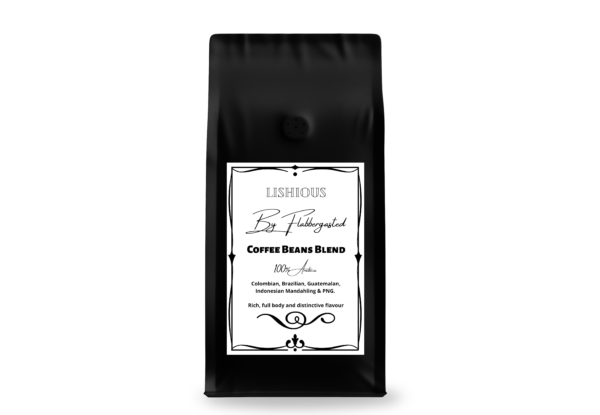
First, distance. Shipping from Melbourne to Perth can feel like delivery from London to Athens in regards to transportation time. If you live in WA or the NT, choose roasters with local depots or those that roast early in the week and use express services. You can likewise pre-plan by buying a little bit previously and freezing portions.
Second, heat. Summer season distribution in Australia can be intense. Also two hours in a warm van can harm light roasts. Some services permit "hold at post workplace" or signature-on-delivery. Making use of those stays clear of a bag cooking on a doorstep. If you obtain a package that really feels abnormally cozy, rest it longer and start with a slightly cooler mixture water to alleviate baked flavors.
Currency and import considerations likewise shape options. Importing a 250 g bag from Europe may cost you more than the coffee is worth by the time tasks and delivery add up. For those chasing after particular Scandinavian accounts, take into consideration aggregated multi-roaster services that team deliveries to Australia to minimize per-bag price and time in transit.
Avoiding the common mistakes that squash light roast
I see the very same mistakes repeated, and they have little to do with the beans themselves.
Rushing the rest. Freshly baked light coffee off-gasses strongly. Developing on day two commonly creates a foamy flower and a mug that tastes brilliant and slim. Provide it more time. That "hollow" level of acidity completes around day seven.
Grinding also crude. If you are getting lemon water and no sweetness, don't blame the roaster yet. Grind better up until you hit an equilibrium of level of acidity and body. For filter, a lot of light roasts want a work 10 to 20 percent better than you 'd utilize for a darker roast. For espresso, light roasts need an also finer work and commonly gain from longer proportions, like 1 to 2.5.
Ignoring water. Light roasts expose water problems. If your pot water is extremely hard, you'll silence level of acidity and clarity. If it's as well soft, the mug can taste sour and papery. I have had accurately excellent results with water around 60 to 80 ppm as CaCO3 basic solidity and 20 to 40 ppm alkalinity. Some distribution solutions include water recipe cards. Use them.
Brewing too hot or too strongly. You can elevate extraction without scorching the surface by using pulse pours and somewhat cooler water, 92 to 95 C, for delicate washed Ethiopians. Hostile, continual puts at 98 C can pull out severe tannins early.
Letting oxygen win. Leaving the bag open on the counter for 2 weeks is a surefire means to plain florals. Roll the bag shut, make use of a canister with a one-way valve, or split into small jars. If you consume alcohol slowly, freeze portions.
How to use your distribution to discover without losing money
Exploration is where distribution radiates. You can go after harvests and seasonal shifts. However no one desires a pantry packed with half-finished bags. Construct a slim path.
Start with a secure support coffee that you know you'll consume even if your experiments fall short. A washed Colombian from a trusted roaster commonly loads that function. Include one "experience" bag per shipment. When the journey strikes, take notes on what operated in your brew method. When it misses out on, change two variables before you give up: grind and dose. I've seen a drab Ethiopian awaken by moving from 15 g to 16 g in, maintaining the exact same 250 g out, and tightening the work by one micro-step on an EK43.
If the service allows notes in your registration, inform them what you liked and what fell flat. Excellent managers use that feedback. I once told a customer that I enjoyed the florals of a particular Yirgacheffe yet found the body as well slim. The following shipment included a Sidama with longer Maillard advancement and a slightly reduced end temperature, and it put like silk while maintaining the jasmine.
Espresso with light roasts via delivery
Light roast coffee is dissentious. It is additionally, when it clicks, a discovery. It tastes like a concentrated filter coffee with structure, not a caramel bomb. But it punishes sloppy circulation and irregular doses.
If your Coffee Beans Delivery service provides an espresso-specific light roast, try it first. The roaster has actually likely constructed a little additional growth to aid solubility. Otherwise, you can make a filter-aimed light roast deal with espresso by adjusting parameters.
I target a longer proportion, commonly 1 to 2.5 or 1 to 3, at 7 to 9 bars, with reduced temperatures in the 91 to 93 C variety to take care of bite. Pre-infusion aids. Some equipments let you hold a line at 2 to 3 bars for 10 to 15 secs, which eases water right into thick grinds. For baskets, high-extraction accuracy baskets can help in reducing transporting. For mills, unimodal burrs deliver quality at the expense of body. If you favor more structure, conelike burrs can round edges.
Plan your deliveries around the requirement to remainder. Most light roasts taste better as coffee around day 10 to 20. That suggests your best efforts might land a week after the mail arrives. Order accordingly.
Price, worth, and where to splurge
Price does not linearly forecast quality. A $20 bag of fresh, tidy, washed Ethiopian from a cautious roaster can beat a $35 anaerobic uniqueness if you prefer purity over tricks. But some cost costs make sense.
Pay additional for deducible microlots when you chase a specific variety like Gesha or SL28, or a farm whose handling you depend on. These whole lots often have actually limited quantities and more mindful sorting.
Pay added for services that guarantee roast-to-ship timelines and change bags that show up with problems. Light roasts amplify baggy, phenolic, and fermentation faults. You need to not money a roaster's knowing curve.

Skip markups on branding alone. If a bag hides roast days, varietals, and processing, you are covering advertising and marketing expenses, not better coffee.
As for shipping, several of the Best Coffee Beans Delivery services fold it into membership prices. Do not be fooled by "complimentary shipping." Compare complete expense per 100 grams provided to your door. The lowest price per gram does not always equivalent worth if you end up discarding stagnant coffee.
Practical ways to check a new delivery service
You do not require a laboratory to evaluate a service. You simply need a method and attention.
Brew the very same recipe across two distributions from the same roaster, maintaining mill and water constant. Keep in mind days given that roast, overall brew time, and sensory notes. Variability beyond a tiny range suggests irregular roast or fulfillment.
When a bag shows up, scent it before opening up. If you capture strong baked peanut or barley, consider heat damage or quakes. Light roast is not expected to smell like toast.
Open, dosage, and look at the beans. Consistent dimension and shade throughout the batch suggest careful sorting and roasting. Pale, insect-bitten beans or blister marks reveal bad eco-friendly option or also warm a drum.
Cup the coffee side-by-side at 60 C and once more at area temperature level. Terrific light roast maintains sweet taste and drops resentment as it cools. If it collapses right into sour and papery by room temp, turn your emphasis to either grind or water. If neither helps, the coffee may not have the thickness or processing sanitation to sustain a light profile.
When to terminate or switch
Loyalty is remarkable, but your taste is worthy of honesty. Switch over when deliveries get here greater than 10 days off roast without warning, when sampling notes squash throughout beginnings, or when customer service treats light roast concerns as nitpicking. I when remained with a beloved roaster with 3 months of low-key cups prior to recognizing their head roaster had actually changed and the style moved a complete shade darker. My pour-overs obtained much heavier and much less express. A switch to a various solution restored the quality I missed.
If you live much from toasting centers or in severe environments, think about local solutions made for your problems. In exotic warmth, look for cool-pack alternatives and shorter transit courses. In colder regions, winter season shipping can dry out beans in low moisture settings. Reseal bags quickly and use canisters.
A portable buying and brewing list for light roast delivery
- Confirm roast date and roast-to-ship window before you buy. Choose bag dimension that matches your regular consumption, ice up the hinge on day one. Align water: moderate firmness, modest alkalinity, prevent extremes. Rest light roasts at the very least 5 to 7 days for filter, 10 to 20 for espresso. Adjust grind first when the cup lacks sweet taste, then modify dosage and temperature.
Where the pleasure lives
The right Coffee Beans Delivery transforms your kitchen right into a sampling area. A washed Yirgacheffe getting here on Tuesday, rested till Saturday, ground a notch finer than recently's Guatemala, and brewed with 93 C water can taste like lemon candies and honeysuckle. The following week, a Kenyan programs up with blackcurrant and a tasty edge that begs for a slightly higher dose and slower drawdown. With an excellent shipment partner, you are not going after coffee, you are discovering it. You build a vocabulary for acid, sweet taste, and structure. You pick up on seasonal drift, harvest waves, and just how weather condition touched a ranch fifty percent a globe away.
Light roast asks you to get involved. It offers you back accuracy, openness, and a sense that your choices matter. Select delivery that respects that. In Australia or anywhere, the Best Coffee Beans Delivery is the one that treats time, oxygen, and logistics as taste choices, not second thoughts. When you find it, your morning cup will certainly tell you so without a single word on the bag.